
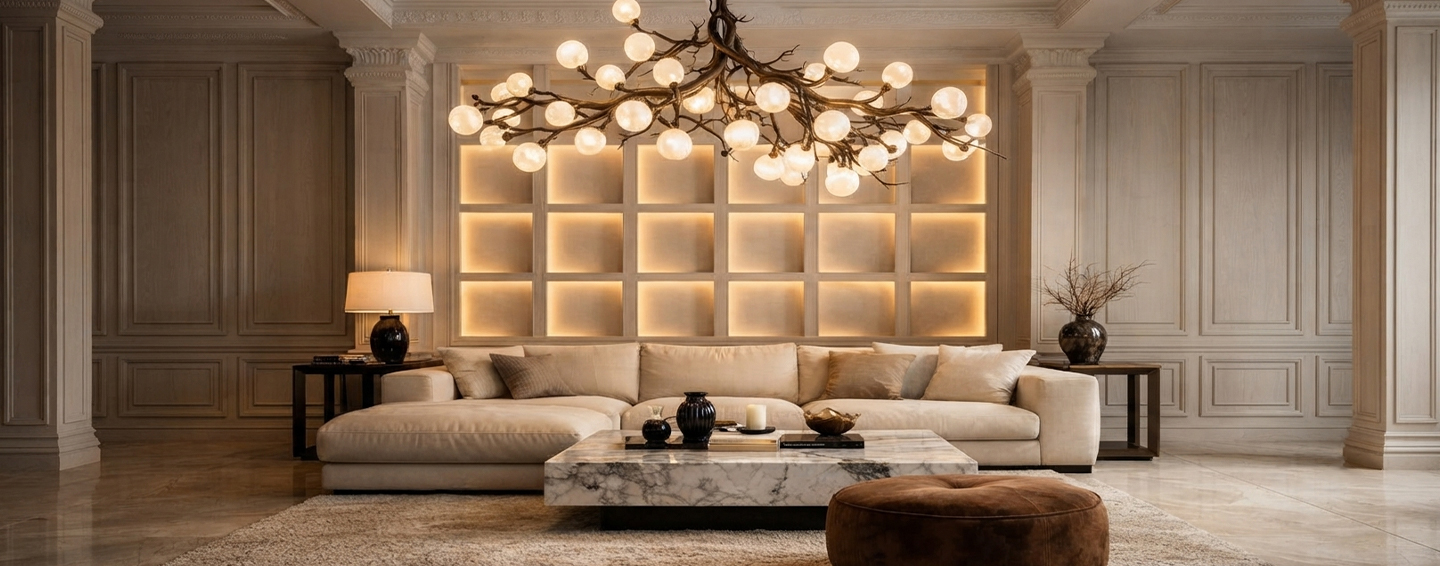
Why Decorative Lights Are the Secret Ingredient of Stunning Interiors
An overhead light switched on in an otherwise dark room rarely creates an inviting space. Instead of warming an environment, a single central fixture floods it with flat illumination, casting sharp shadows that make beautiful furniture look dull and uninspired. Interior designers avoid this issue by using decorative fixtures as a strategic tool rather than a final afterthought. These pieces do more than provide basic visibility; they inject texture, define structural zones, and alter how you experience a room’s proportions. Understanding how to use these items allows you to transform any ordinary living area into a beautifully balanced, intentional environment.
The True Purpose of Decorative Illumination
Many people tend to view lamps and pendants merely as utilitarian tools to banish darkness. However, specialized fixtures serve as the visual punctuation marks of interior design. Without them, a room lacks depth, regardless of how well-curated the furniture or paint selections might be.
When you enter a room, your eyes naturally seek out focal points. A striking sculptural pendant over a dining table or an elegant pair of sconces flanking a mirror provides those necessary anchors. They draw the eye inward, establishing order and structure within an open space. Furthermore, these elements act as physical decor pieces during daylight hours when switched off, adding sculptural form, contrasting materials, and stylistic definition to your surfaces.
The Three Pillar Approach to Lighting Layouts
To understand why decorative pieces are so impactful, it helps to see how they fit into a structured, multi-layered design plan. Relying on a single source of brightness is a common mistake that flatters a room’s temperature. Instead, designers rely on three distinct layers working in harmony.
Ambient Foundation
This is the general base layer that replaces natural daylight. It allows you to navigate a room safely and perform basic tasks. Recessed ceiling cans or flush-mount fixtures typically handle this job. While necessary, ambient brightness alone is often cold and sterile, providing function but zero atmosphere.
Task Utility
This layer provides direct, focused beams on areas where specific activities occur, such as cooking at a counter, reading in an armchair, or working at a desk. Under-cabinet LED strips and adjustable desk lamps are classic examples. Task fixtures shield your eyes from strain by putting illumination exactly where your hands or books need it.
Decorative Definition
This final layer bridges the gap between function and aesthetics. Decorative fixtures emphasize architectural details, highlight artwork, or stand alone as design statements. This layer softens the transitions between bright task areas and dim corners, creating an even, comfortable flow throughout the entire space.
How Decorative Fixtures Transform Spatial Perception
Lighting alters how we perceive physical dimensions. By choosing your decorative pieces wisely, you can visually manipulate the size, height, and overall feel of the room.
Drawing the Eye Upward
If a room feels cramped or has low ceilings, long vertical pendants or upward-directed wall sconces can fix the problem. Uplighting guides the eye toward the ceiling, which creates an illusion of loftiness or airiness.
Expanding Narrow Rooms
In narrow spaces like hallways or compact entryways, placing small decorative lamps or low-profile sconces along opposite walls break up the tunnel effect. This pushes the boundaries of the walls outward, making tight passages feel significantly wider and more welcoming.
Softening Hard Structural Angles
Modern architecture often relies on sharp angles, straight lines, and hard surfaces like concrete, tile, and stone. Introducing a decorative fixture with a rounded fabric shade or an organic curved glass silhouette adds immediate softness. This balance prevents a contemporary space from feeling too industrial or clinical.
A Room-by-Room Strategic Integration Guide
Every area in your home serves a different everyday function, meaning your choice of decorative accents must adapt to support those specific activities.
The Living Room: Crafting a Social Hub
The living room is a multi-use area meant for entertaining, unwinding, and gathering.
- Avoid the temptation to use bright overhead panels during evening hours.
- Instead, place low-wattage table lamps on side tables at eye level when seated to foster an intimate, conversational atmosphere.
- Position a slender floor lamp next to a reading chair to define a dedicated relaxation nook.
- Add micro-lights inside bookshelves to illuminate your favorite objects and give the walls a warm, receding glow.
The Kitchen: Merging Cleanliness with Style
Kitchens require high visibility for safety, but they should not feel like an operating room.
- Hang a pair of statement pendants over an island or breakfast bar to create a stylish visual boundary between the cooking area and the rest of the home.
- Ensure these pendants have a dimming feature so you can lower the output when cooking is finished and the space transitions into an area for casual socializing.
The Dining Room: Setting an Intimate Stage
In the dining room, the table is the center of attraction.
- Center a dramatic chandelier or a sleek linear fixture roughly thirty to thirty-six inches above the surface of the table. This anchors the room and keeps the focus on the meal and conversation.
- Incorporate a nearby sideboard styled with two matching accent lamps to balance the downward output of the central fixture and remove harsh shadows from guests' faces.
The Bedroom: Cultivating Restful Simplicity
Bedrooms should be sanctuaries dedicated to rest.
- Eliminate bright ceiling fixtures in favor of wall-mounted swing-arm sconces on either side of the bed. This arrangement frees up your nightstands for books and personal items while keeping the illumination soft and localized.
- Add a small accent lamp on a dresser across the room to provide a gentle pathway of light that does not disrupt your evening wind-down routine.
Selecting Materials, Textures, and Scales
A beautiful interior relies on contrast and proportion. When selecting your decorative fixtures, see them with the same consideration you give to your furniture pieces.
Material Contrast
If your living room features dark wood finishes and matte paint, look for fixtures made of polished metal, clear glass, or reflective ceramic. These materials tend to catch the light and add a layer of brightness even when the bulb is turned off. Conversely, if your space is filled with bright surfaces, a matte black or textured concrete lamp can add much-needed grounding weight.
Proportion Matters
Scale can make or break a design layout. A tiny lamp sitting on a massive console table looks lost and accidental. An oversized pendant crowded into a small breakfast nook can make the entire area feel claustrophobic. Measure your furniture widths and ceiling heights before shopping to ensure your new fixtures feel proportional and intentional.
Deciphering the Functional Side: Bulbs and Temperature
A stunning decorative fixture will fail to impress if it is outfitted with the wrong light bulb. Pay attention to color temperature, which is measured in Kelvins (K).
|
Target Area |
Ideal Kelvin Range |
Visual Atmosphere |
|
Bedrooms & Living Rooms |
2700K |
Warm, amber, cozy, traditional |
|
Dining Areas |
2700K |
Warm, intimate, gathering-focused |
|
Kitchens & Workspaces |
3000K - 3500K |
Neutral, crisp, clean, clear |
For relaxation spaces like bedrooms, living rooms, and dining areas, always select bulbs rated at 2700K. This range produces a rich, amber hue that mimics the soothing quality of candle flame or classic filament bulbs. Save crisper 3000K to 3500K bulbs for utilitarian tasks in the kitchen or laundry room. Completely avoid cool white bulbs (4000K or above) in residential zones, as they flatten textures, distort colors, and ruin the ambiance you are trying to build.
Simple Updates for Immediate Impact
You don’t need an extensive budget or a team of contractors to overhaul your home’s lighting atmosphere. A few minor adjustments can produce massive visual rewards.
First, add plug-in dimmers to your exiting floor and table lamps. Being able to lower the output of your lights as night falls quickly shifts the mood of your home. Second, explore plug-in wall sconces if you want the organized look of hardwired fixtures without the need to cut in your drywall.
Many modern options feature beautiful textile cords that serve as an extra design element on your walls. Finally, introduce smart plugs to tie your decorative lamps together, allowing you to turn on your entire evening accent scheme with a single swipe or schedule.
Elevate Your Space Today
Decorative lights are not a sophisticated addition reserved solely for high-end design projects; they are essential component of any successful interior layout. By stepping away from the simplicity of a single overhead switch and embracing varied heights, textures, intensities, you gain control over how your home looks and feels.
Take a walk through your room this evening and observe where the shadows fall. Identify the dark corners, the flat walls, and the uninspired spaces. Browse our collection of modern sconces, and artful table lamps today to find the exact pieces you need to bring balance, warmth, and designer style to your home.